

Remember when we thought we had a handle on Dave’s medical situation? When we thought the August surgery might finally put an end to the revolving door of kidney infections and hospital visits?
Well, October was apparently the month for meeting every specialist Northwestern has to offer. We’ve been collecting -ologists like they’re limited-edition baseball cards, so let’s get everyone up to speed.
First stop: Infectious Disease with Dr. Au — October 7
We kicked off the month with an appointment with Dr. Au in Infectious Disease. He was amazing. We were called back into the room before our butts even had a chance to hit the waiting room seats, so we were already off to a great start. Northwestern, if you’re keeping track, we appreciate the frequent-flyer treatment.
Dr. Au explained that Dave’s frequent UTIs are largely due to—and exacerbated by—the urinary diversion created during his January surgery: the ileal conduit.
For anyone who needs a refresher, part of Dave’s intestine was removed and used to create a new pathway for urine to travel from his kidneys out through his stoma. Which brings us to a fun little fact: intestines are full of gastrointestinal bacteria. So the pathway Dave’s urine travels through is constantly exposed to bacteria that normally live in the digestive tract.
In other words, Dave is quite literally in a very shitty situation.
Because of this, finding bacteria in a urine culture is not necessarily a sign of an infection for someone with an ileal conduit. Bacteria are expected to be present. For Dave, one of the biggest indicators of a true infection will be a fever.
The nature of his urinary diversion makes these types of infections more common. However, since the blockage was repaired during his August surgery, we’re hopeful that the frequency of these infections will decrease. Hope is a lovely thing. We would also accept fewer hospital admissions.
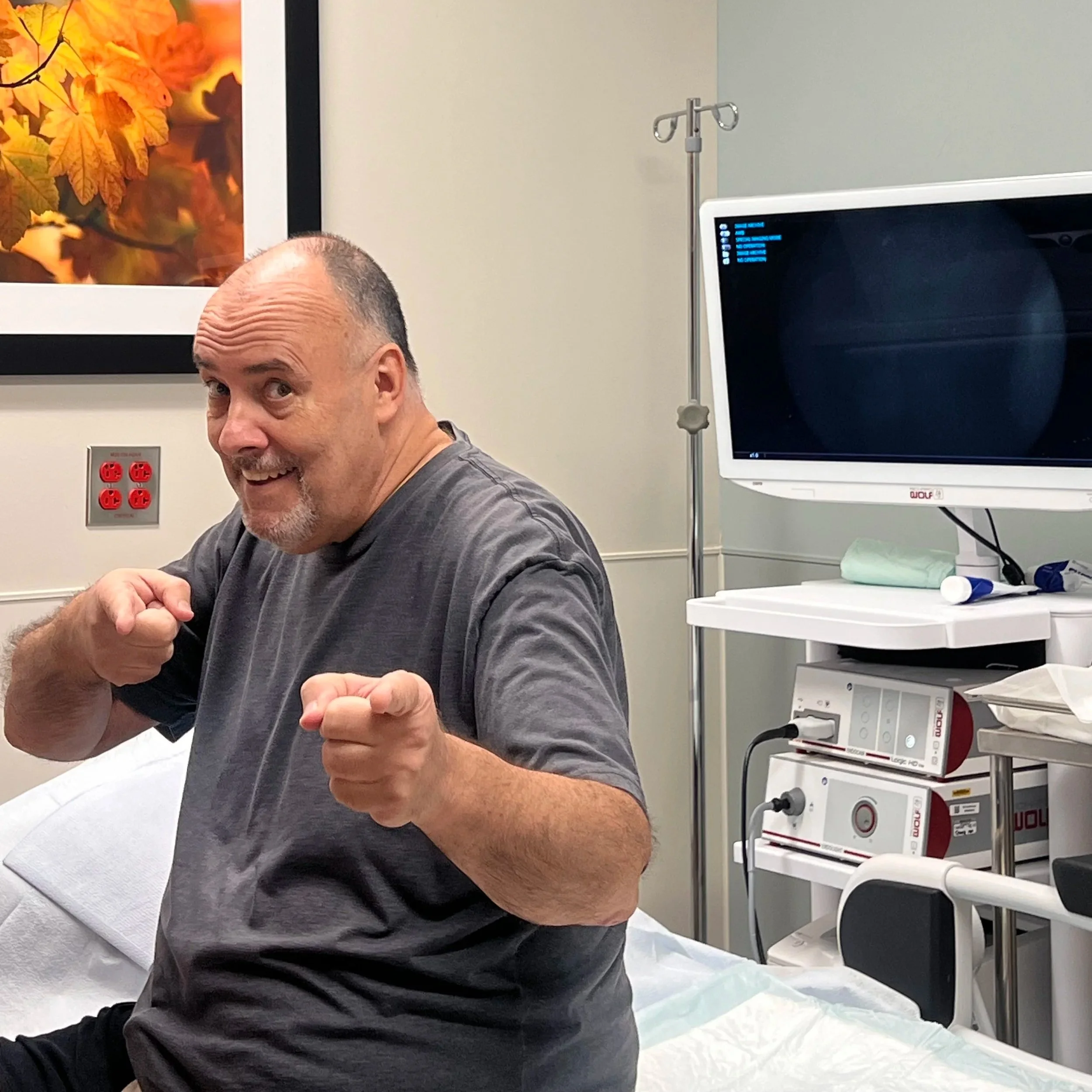
Next stop: Urologic Reconstruction with Dr. Lee — October 7
A few hours later, we walked to another wing of the Arkes building for a follow-up with the man of few words himself, Dr. Lee, Dave’s urologic reconstructive surgeon.
Dr. Lee sent in his urology resident to answer our questions—which was probably a wise decision, since Dr. Lee and questions have never exactly been a match made in heaven. Then he came in to remove the stents that had been placed during the August surgery.
I watched in total amazement (and gratitude that I had not eaten yet) as Dr. Lee threaded what felt like three feet of wire through Dave’s stoma and up toward the ureters, where the stents had been living.
And because apparently watching this procedure in person wasn't enough, there was a camera attached to the end of the wire. That camera displayed the entire journey through Dave’s insides on a medium-sized television.
So there I was, watching what can only be described as an internal intestinal Rorschach test, while Dr. Lee snipped and pulled out the stents.
It was absolutely wild. And, in case you’re wondering, I did NOT stop for Beatrix meatballs after this appointment.
The Appointment We’d Been Waiting For: Nephrology with Dr. Patel — October 20
On October 20, we trekked back down to Northwestern during morning rush hour to meet with the specialist we had been most eager to see: the nephrologist, aka the kidney expert.
Once again, we were called back before our butts hit the waiting room seats. At this point, we’re convinced Northwestern has finally recognized our frequent-flyer miles.
Dr. Patel is kind, informative, and—perhaps most importantly—uses regular-person words to explain medical things. This means people like Dave can understand what’s happening without needing a medical dictionary. (I’m basically a fourth-year medical student at this point, but I still appreciate the translation.)
While this was the appointment we had been anticipating most, the news was not what we were hoping to hear.
The severity of Dave’s kidney blockage, combined with the multiple serious infections he experienced over the course of four months, has caused significant, irreversible kidney damage. Dave has been diagnosed with Chronic Kidney Disease (CKD), Stage 3B.
A quick kidney lesson: Chronic Kidney Disease is categorized into stages based on how well the kidneys are functioning. Stage 1 is the mildest, while Stage 5 is kidney failure, when treatments like dialysis or a transplant become necessary. Stage 3 is divided into 3A and 3B.
Dave is currently at Stage 3B, with approximately 35% of his kidney function remaining.
CKD can be a progressive disease, meaning kidney function can continue to decline over time. But we are hopeful that Dave’s current kidney function will remain relatively stable for years to come.
Unfortunately, the ileal conduit creates an additional challenge. Because of the way this urinary diversion is constructed, some urine will flow backward toward the kidneys. Over time, that backflow contributes to further kidney damage. There isn't anything Dave can do to reverse the damage that has already happened, but there are things he can do to help protect the kidney function he has left.
That means continuing to manage his diabetes and blood pressure, exercising, and keeping up with regular bloodwork and monitoring.
I also made it very clear that if Dave ever needs a kidney, Christopher needs to step up.
We will now find out if Christopher actually reads these updates!
Next Up: Hematology and the Mystery of the Missing Red Blood Cells
This past Wednesday, we met with the hematologist to discuss Dave’s severe anemia.
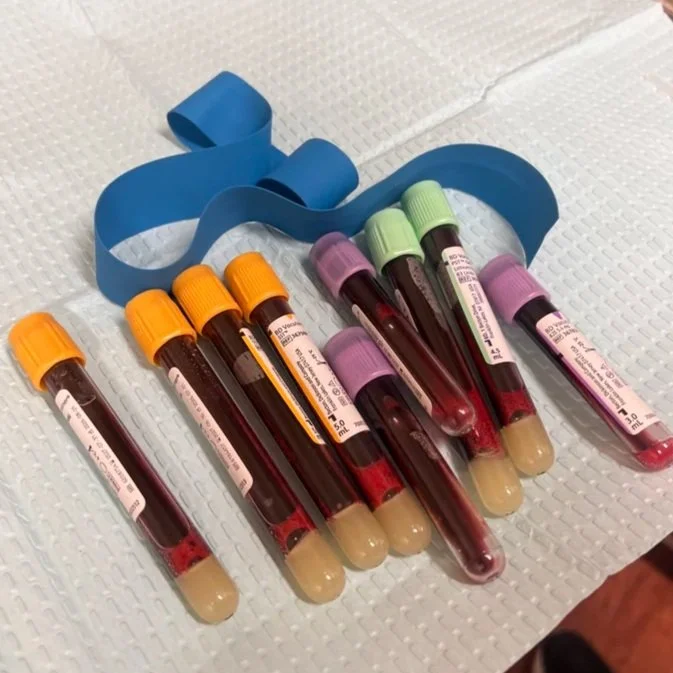
While the past year and a half of surgeries, treatments, infections, and recovery have certainly contributed, the biggest culprit appears to be his decreased kidney function. Dr. Nelson took 9 vials of blood to run a series of tests - Dave will be trick-or-treating as a raisin this year.
Here’s another science lesson: your kidneys produce something called erythropoietin, or EPO. It’s a hormone that tells your body to make red blood cells. When your kidneys aren't functioning properly, they can’t communicate this message as well.
Given his decreased kidney function, they aren’t able to communicate that “make red blood cells, please” message (they’re also inside a male, so is it shocking communication is poor?)
A normal hemoglobin level for a male is generally between 13 and 17. Over the past year, Dave’s has been hanging out somewhere between 7.8 and 10.
Given his decreased kidney function, the hematologist expects Dave’s new normal hemoglobin range to be around 10–11. If it drops below that, he can receive injections of synthetic EPO to encourage his body to get back to making red blood cells.
Science. It is amazing.
And Finally: Our Favorite Ologist, Dr. Hussain
After making the rounds with all the new ologists, we ended October with my personal favorite: Dave’s oncologist, Dr. Hussain.
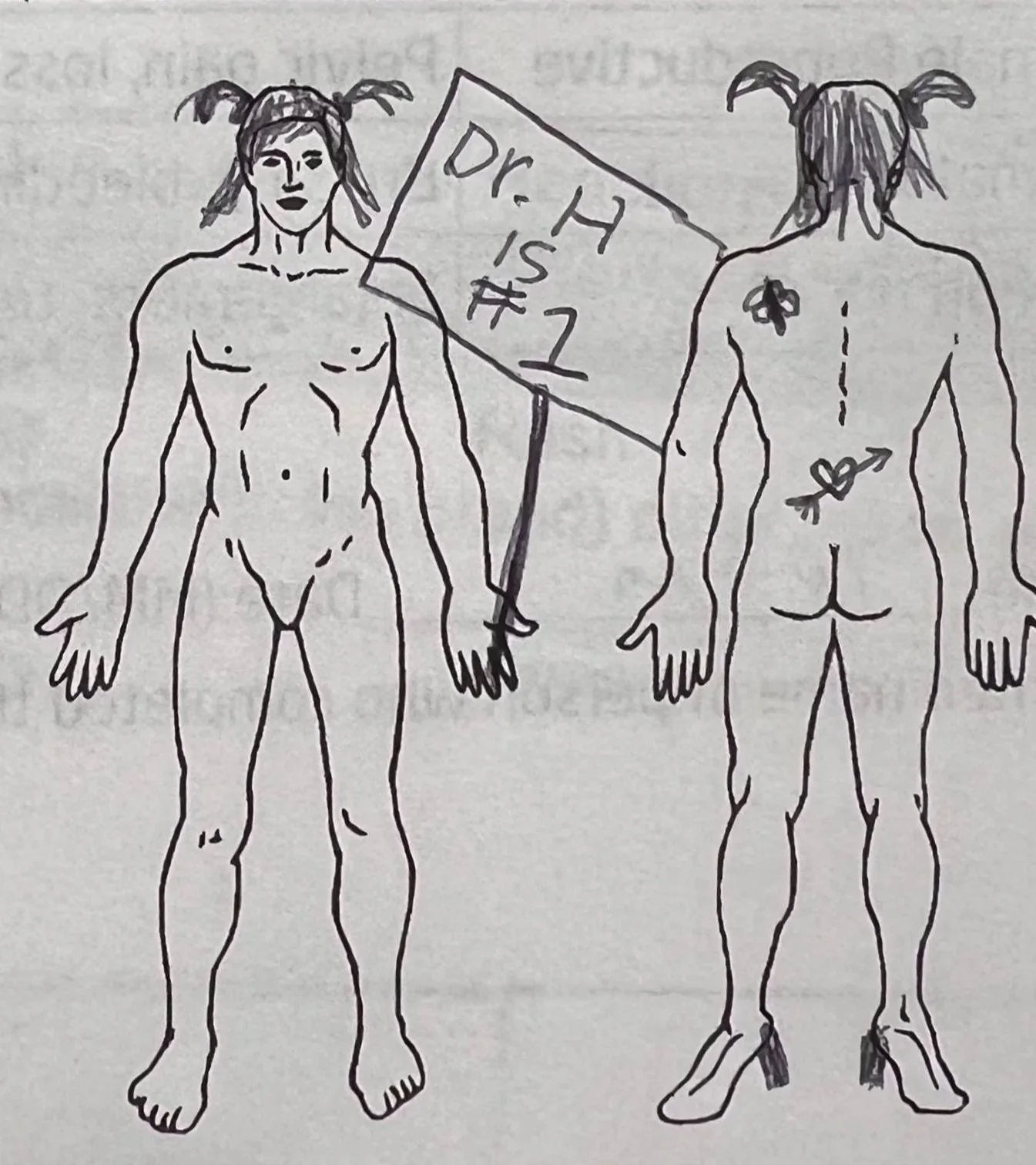
Naturally, I helped Dave fill out his paperwork and made sure the artwork accurately reflected his current medical status. Some traditions are important.
We updated Dr. Hussain on everything that had happened throughout the month, reviewed the latest specialist appointments, and talked about what things look like going forward.
The good news is that the longer Dave goes with clear scans, the better his overall outlook becomes. So we’re continuing to keep an eye on things, but we are grateful that cancer is not currently the main event.
Remember that time Dave had cancer? It feels like a lifetime ago, but apparently we still need to keep that particular chapter in the medical history.
What’s Next? A Few Months Without the Ologist Olympics
Now, thankfully, we get to take a few months off before the Ologist Rally Round Two begins.
Between now and January, Dave needs to:
Have a kidney ultrasound.
Follow up with his urologic surgeon.
Repeat bloodwork for nephrology and attend an in-person follow-up.
Have another CT of his chest, abdomen, and pelvis for oncology.
Follow up with his oncology surgeon for his one-year check-in.
Meet with his primary care doctor to discuss thyroid function, elevated heart rate, and diabetes medication options given his kidney function.
Get his port flushed at the infusion center.
Thank God he got his flu shot last week, or we would really be booked solid.
It has been a busy October, and we are looking forward to a calmer Thanksgiving season. We have so much to be thankful for – for example, ME. As I remind my family every day, at every doctor's appointment, and pretty much any time I walk into a room.
You're welcome, everyone.
We'll keep monitoring, keep asking questions, and keep doing our best to keep Dave's remaining kidney function as healthy as possible. For now, we're grateful to have some answers, a plan, and a few weeks without having to make the drive to Northwestern.
And if Christopher is reading this: start hydrating. You never know.
